|
Research In Progress |
I am currently examining Classical Athenian characterizations
of Hermes, god of commerce and invention. These characterizations provide a
medium for the codification of civic ideology and its internal tensions in the
democratic city. The desecration of statues sacred to Hermes in 415 BC has been
discussed by historians and by scholars of the rhetorical texts documenting
it, and Hermes has been studied as a specifically religious figure. Not considered,
however, is Hermes' characterization in civic discourse as an expression of
ideological contention between different class interests.
During the emergence of democracy in Athens, Hermes' domain of commerce and
innovation were central to debate about the acquisition and use of both rhetoric
and material wealth, two important levers of political influence in the democratic
state. Athenian aristocrats, threatened by the increasing participation of unlanded
classes in city politics, utilized a pejorative 'rhetoric of the banausic (vulgar)'
to designate commerce and technology, activities ruled by Hermes and allowing
for the growth of an increasingly influential group of nouveaux riches. Conversely,
non-elitists saw these activities as characteristic of a specifically Athenian
spirit of daring and productive enterprise. While Athenians revered their gods
in religious rituals, they did not refrain from characterizing them negatively,
both in the public discourses of the city-sponsored dramatic festivals and oratory,
and in the more exclusive discourse of academic philosophers. Representations
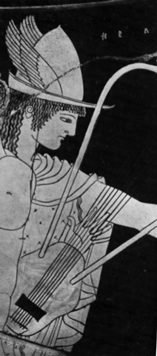
of Hermes in art from democratic Athens also provide relevant evidence for this
study.