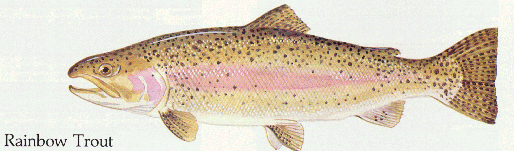
Rainbow trout are native to the waters of the Pacific Ocean drainage, members of the family Salmonidae. Their relatives include the trouts (e.g. brook trout), chars (e.g. Arctic char) and salmons (e.g. coho salmon). Rainbows, like other salmonids, are carnivores, feeding on smaller fish and insects. Rainbow trout are found virtually all over North America, having been stocked for many years in, amongst other places, the Great Lakes basin. Prized for their tasty flesh and their "fight" the rainbow trout are a popular target for recreational fishers. It is their abiblity to sprint (manifested as "fight" at the end of a fishing line) that makes the rainbow trout an appealing model system in which to study the exercise physiology of muscle. A moderate size (~ 500g) rainbow trout can accelerate from a standstill to about 35 km/h in about one second; attaining a speed of about 10 km/sec (almost instantaneously! Rainbows are also known for their jumping ability, having to routinely navigate waterfalls on their upstream spawning migration. They can easily leap into the air a distance 3-4 times its body length. For a human, this would be akin to jumping out of a swimming pool 5-7 meters into the air!!
The research in our lab focuses on the mechansims and regulation of metabolic recovery of muscle from sprint-type activity. Because of their commercial importance combined with the fact that they are readily available across Canada from commercial hatcheries, the rainbow trout has become the model organism for studies in fish physiology and biochemistry.