~ Roman Blinds ~
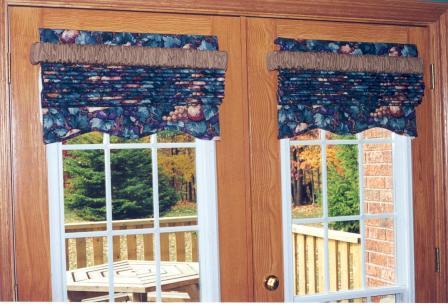
These Roman Blinds are drawn up and down using cords that are strung through
hand-sewen rings. This is a very practical and traditional style for French doors
that exit out onto a patio. These blinds have been lined with Blackout liner to
help with insulation. The bottom of the blind is scalloped to add extra interest
to the design.
A shirred rod is mounted 2-3 inches below the top of the blind to
add a contrasting visual effect. A solid chintz fabric in a contrasting color is
chosen so it will accent the blind.
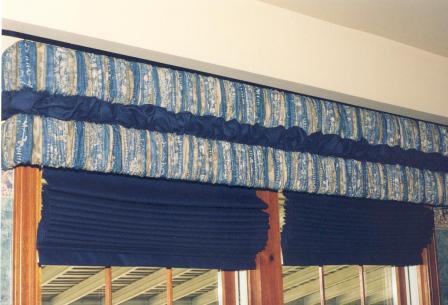
These Roman Blinds are mounted inside the trim versus outside, because of the
windows design. There are two old-fashioned shallow windows, so each blind must
function individually.
This Valence is called "Pegasus" and uses two different fabrics, a solid and a
contrasting pattern. This valence spans the entire width of both windows, which
helps visually connect both of them.
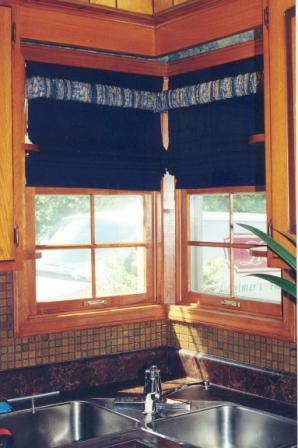
This symetrical corner-style displays a creative use for stationary Roman Blinds.
They are not functional, and only hang down half way in order to give some colour
and privacy.
To add some interest to the drapery treatment, an "L-shaped" shirred valence
is added in a contrasting fabric. It is mounted 2 inches below the top of the Roman Blinds which
creates an interesting statement.
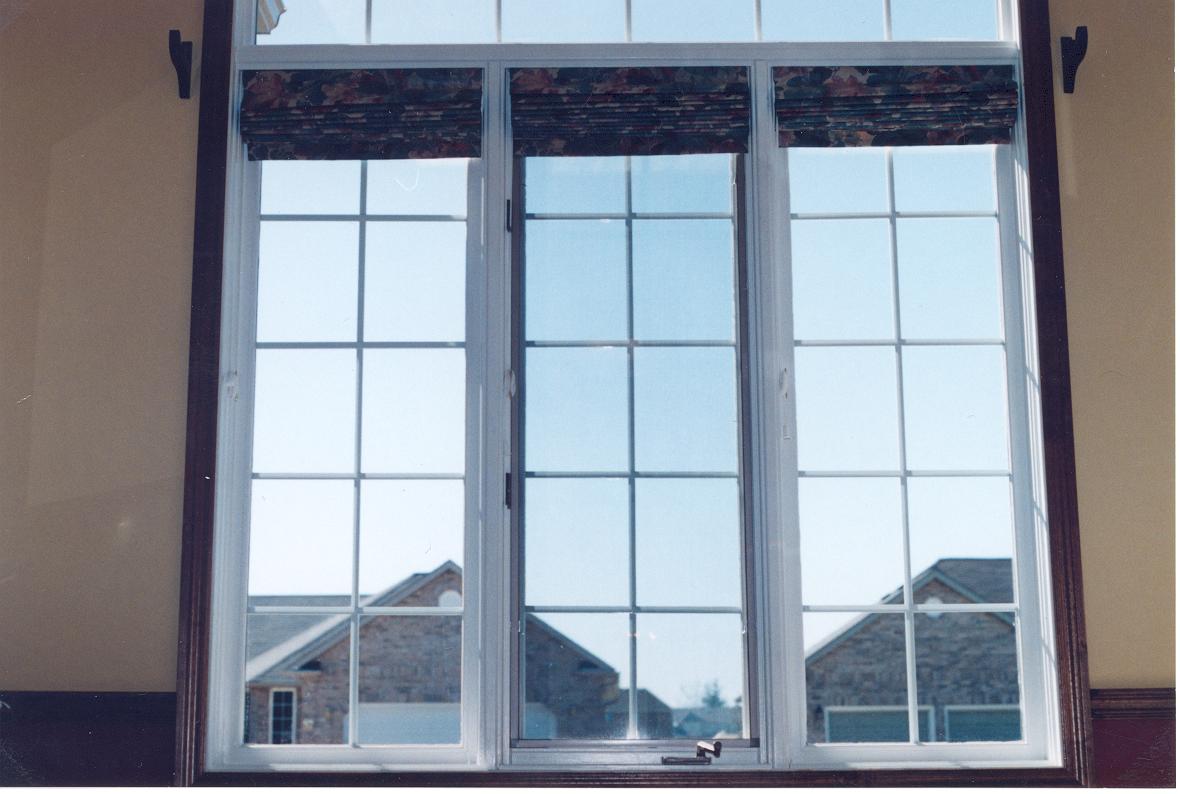
These Roman Blinds are mounted inside each window, so they can function independently.
To help with insulation they are lined with "Blackout" Liner. They can be fully drawn
the entire height of the window.
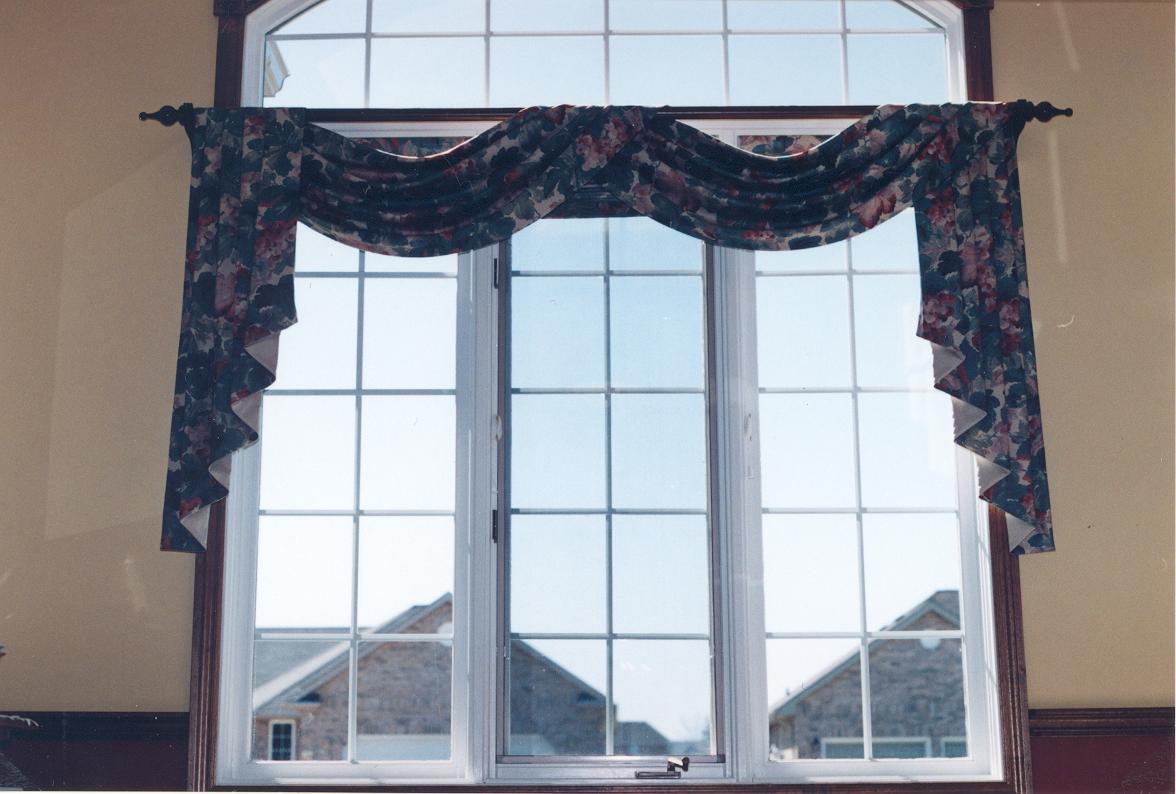
This style of Swag is called "Open-Pole Roman Swags and Jabots". They give the appearance of
one continuous draping of fabric, when in reality there are four separate custom pieces. Each is
mounted onto the rod with velcro for easy cleaning.
The pole, supports and finials are stained to match the trim in the rest of the room. The Jabots are
lined with an alternate chintz fabric. This style looks very time-less and elegant against the Roman
Blinds.