Subtractions from our Records
A reminder...
We need to use our previous bank reconciliation as a source of information. There are often outstanding cheques from the previous month that will be cashed early in the month. These outstanding cheques will not appear on our cash disbursements list for the current month; therefore, you may erroneously assume that there is a debit to your bank account that you have not recorded. If you don't look at the previous reconciliation, you cannot confirm whether the debit is an outstanding cheque (that you've already recorded) or a new item (that is unrecorded).
Continuting on...
There are two items on the bank statement that decrease the bank balance that would have not been recorded in our cash disbursements:
- a service charge on our bank account (April 30),
- a debit memo (April 22).
Item #1 - Service Charges

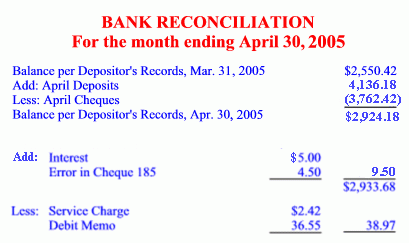
Highlighted in yellow above is a debit memo from the bank indicating the bank has deducted the service charges ($2.42) incurred for the month on our bank account. As you are all aware, banks charge for the services they provide on our account. We will need to make an adjusting entry for this when we have completed the bank reconciliation statement. Since this decreases our cash, we need to record it in our records on the bank reconciliation.

Item #2 - Debit Memo

Highlighted in yellow above is a debit memo indicating we deposited a cheque the bank was unable to cash due to insufficient funds. This is more commonly known as "bouncing a cheque." One of our customers wrote a cheque for $36.55, and he/she didn't have the money in his/her account at the time the bank tried to cash it. When we accepted the cheque, we recorded it in our cash account; therefore, we need to subtract it from our cash account to reflect the fact we now know we did not receive the cash. We will need to make an adjusting entry for this when we have completed the bank reconciliation statement. Since this decreases our cash, we must subtract it from our records on the bank reconciliation.